
Blogs
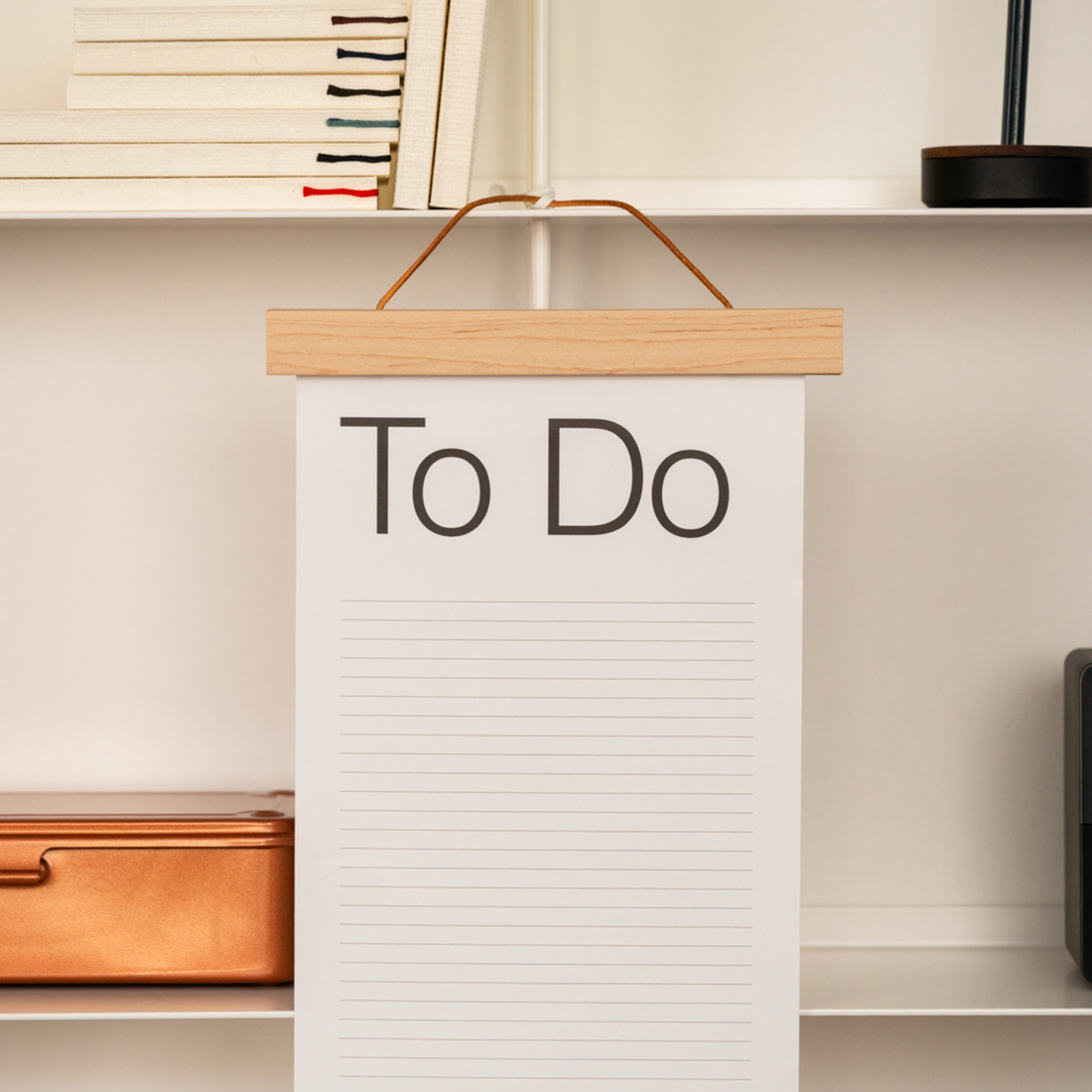
How to Create Effective To-Do Lists: Strategies and Practical Tips
To-do lists are essential tools for improving productivity and organizing daily tasks. But how do you create a truly effective list? In this article, you'll discover strategies and practical tips to optimize your time and make every day more productive.
Learn more
MD Paper by Midori: The quintessential writing experience
In the world of Japanese stationery, few brands evoke the same sophistication and quality as Midori . Among its most iconic creations is the MD Paper line , a collection of notebooks and journals designed to maximize the pleasure of writing.
Learn more
Tips for Using a Planner for Your Financial Organization
Using a financial planner can help you gain greater clarity about your financial situation. Keeping track of things can give you a better understanding of exactly where you're spending your money and where you could save.
Learn more
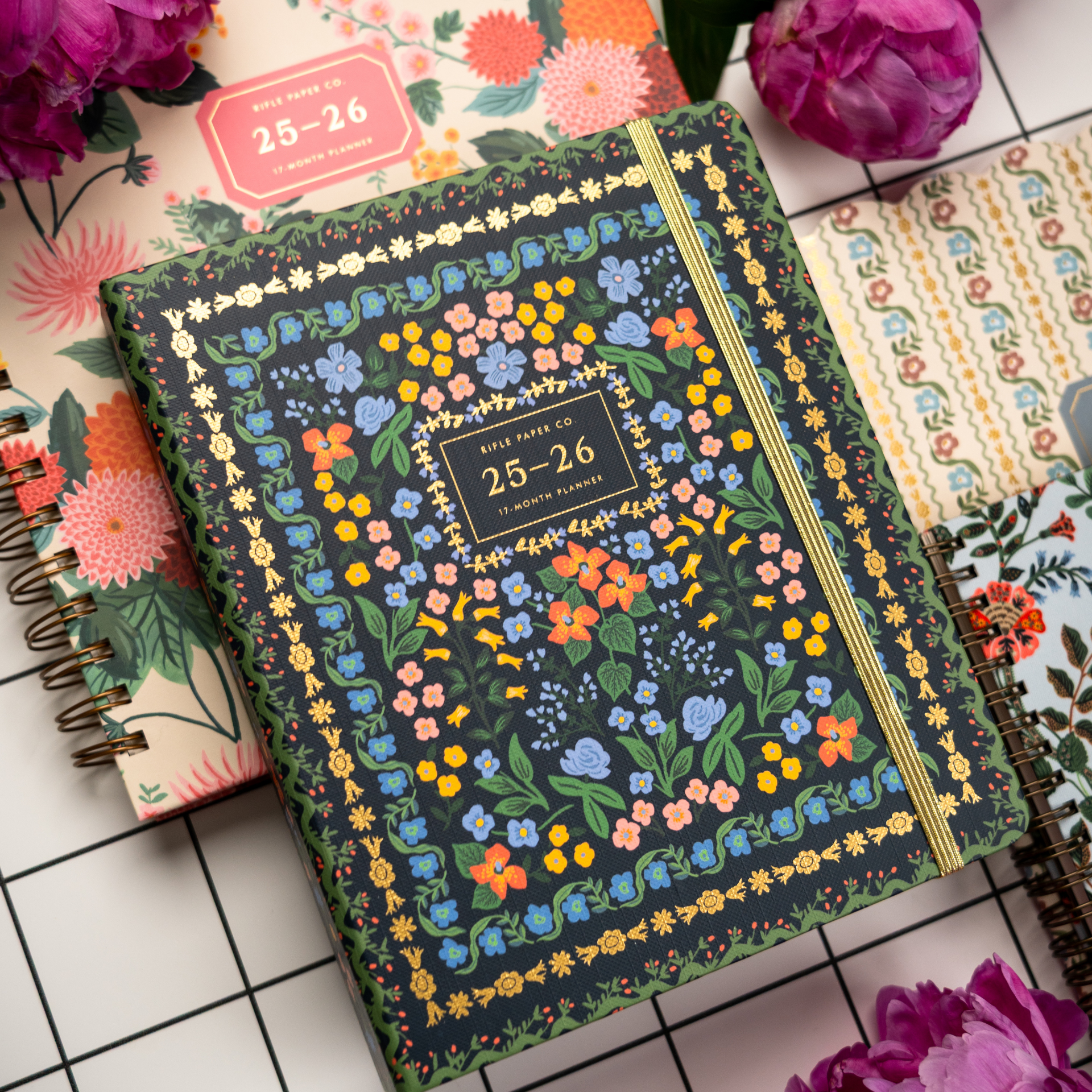
Guide to the 2025 agendas
This year we've decided to present the many 2025 planners you can find on Saypaper in as many videos on our YouTube channel! EPISODE 1: The Completist, Nuuna, and Mishmash's agendas - WATCH IT HERE EPISODE 2: diaries of Notem, Octagon and Marjoleen Delhass - WATCH IT HERE EPISODE 3: Rifle Paper and A-Journal diaries - WATCH IT HERE EPISODE 4: Appointed and Traveler's Notebook - WATCH HERE
Learn more
ACADEMIC DIAGENDA 2024/2025
Introducing the various 2024/2025 academic planner models, perfect for anyone whose year always begins in September!
Learn more
How to Get Organized with a Year Task Planner
Appointed 's best-selling template, the Year Task Planner, is a very well-organized weekly planner, always available in various colors in the academic version (dated from August to August) and in the classic version (dated from January to December). Its main features are having the days of the week on a full page and on the next page a lot of space for the priority weekly, the to do and the notes . There is obviously also the annual and monthly calendar to always have the bigger picture. How to Turn Your Year Task Planner Into Your Roadmap: Start with a holistic vision First, you need an overview of the coming year. This is what the annual calendar is for: highlighting important dates. These can be birthdays and anniversaries, but also distant appointments already scheduled, important events, etc. It is especially helpful to refer to these pages at the beginning of each month. Plan the month Once you have a comprehensive overview of the important dates in your annual calendar, you can start tracking monthly goals, action items and milestones, appointments, and more each month. The classic monthly grid is intended to provide a concise overview of everything, that quick overview I always talk about. Starting from the annual calendar, you can record important dates in the monthly calendar boxes, then, one by one, you can indicate the commitments and things not to forget that will come up that month. You'll find a page to record your goals and priorities for the month, because putting them down on paper is always the first step towards achieving them. Plan for the week It's time to narrow your focus to weekly planning. One-page weekly layout for daily planning and reminders. The other page is dedicated to detail: that is, the specific priorities of that week, the to-do list that can be filled out day by day or all at once at the beginning of the week - this depends on what is more useful to you - and a space for notes, where you can write down everything you need to optimize your planning (or your memory 😉) This is the page you'll likely have open on your desktop most often, so make it yours, every week. For example, try using different colors for the different items on your to-do list, so that your family commitments will be much more visible if they have a different color than the one you use for work items . The notes section, being dotted, lends itself very well to being transformed into a habit tracker to keep track of what you want, or to make diagrams or even as a brainstorming space, to jot down new ideas and new suggestions so that they don't get lost.
Learn more
Exhibitions not to be missed this spring
Van Gogh. Masterpieces from the Kröller-Müller Museum - Museo Revoltella, Trieste For the first time in 134 years, the portraits of Monsieur and Madame Ginoux, the owners of the legendary Café de la Gare in Arles, can be seen together, the one painted in shades of red and green, the famous and powerful Café de Nocturne. More than 50 masterpieces by the celebrated Dutch painter, renowned for transforming pain into something truly beautiful, are on display in Trieste. Monet - Padua, San Gaetano Cultural Center Padua is always worth it, take it from someone who lived there for a long (long) time and left a piece (one) of their heart here. On display are the gigantic Water Lilies, the reflections of the sky in the waters of the Thames, the idyllic landscapes of Argenteuil, the portrait of his son Michel, and other masterpieces from the Musée Marmottan in Paris. These are many of the paintings that Monet himself loved most and that he kept with him until his death. Brassaï - Milan, Royal Palace An exhibition that tells the story of a love affair: that between Brassaï, a Hungarian photographer, and Paris, the city where he lived most of his life. From Montparnasse to the slums to the great monuments, the faces, the dark and scandalous corners, as only Paris can have, it is a love that truly shows in all his photos. Mirò and his colours have always had a great fascination for me. The exhibition dedicated to the great painter and sculptor (and a thousand other things) brings together around a hundred paintings, temperas, watercolours, drawings, sculptures and ceramics from private Italian collections and French galleries. Anselm Liefer - Florence, Palazzo Strozzi Palazzo Strozzi always knows how to amaze! On display, Anselm Kiefer—one of the most versatile contemporary artists—takes us on a journey through allegories, figures, and forms that explore humanity's great questions. Kiefer is, above all, a passionate enthusiast of poetry and philosophy, painting, sculpture, installation, and photography; he has experimented with it all.
Learn more
Lately on YouTube
If you haven't subscribed to our channel yet, you can do so HERE so you don't miss any new videos! We've found our favorite channel! A new video comes out every week, and we chat about organization, planning, news, promotions, and most importantly, our favorite products! Lately we've been talking about: TRAVELER'S NOTEBOOK A video tutorial on how to customize the most iconic Japanese notebooks (because you can insert as many refills as you need, there's something for everyone!) OUR JOURNALING TIPS That is, the 5 reasons why I recommend you keep a journal. What it's really for, why it's beneficial , and what not to worry about. SAYPAPER PRESENTS BLACKWING A bit of history, but above all, how the classic Blackwings write and what the limited-edition Volumes are. If you like pencils, this video is a must-see ;)
Learn more
The Timeless Traveler: The Iconic Traveler's Notebook
When you hold a Traveler's Notebook in your hands, you immediately sense the quality craftsmanship and attention to detail. The soft, durable leather cover, which improves with age and use, tells stories of adventures past and those yet to come. It's as if every scratch, every crease, every mark carries with it the memory of places visited and emotions experienced. But what makes the Traveler's Notebook truly unique is its versatility, its infinite customization possibilities. Inside you can insert as many refills as you want: notebooks and pockets, everything will always be replaceable, removable or added, allowing you to customize your Traveler's according to your needs and passions. You can insert refills with blank pages for your sketches, lined refills for writing your thoughts and notes, squared or dotted pages for all your plans and lists, but also planners for your work planning and even pockets to store souvenirs such as tickets, postcards or photographs. So, grab your favorite pen, open your Traveler's Notebook, and get ready to write the next page of your story. Because with a Traveler's Notebook, every trip becomes a timeless adventure. The notebook refill is similar to A5 size, except it's thinner in width. This makes it easy to carry and also ideal for writing. You can also insert maps, tickets, and A4 sheets of paper folded in three. The refill is simple and minimal, making it easy to customize. You can color it, write on it, attach stickers, and much more. The TRAVELLER'S notebook is made of a cowhide cover made in Chiang Mai, Thailand, and a notebook with original MD Midori paper, made in Japan. You can start using the notebook as is, or add a zippered case for cards and pens, a planner , or a different insert for a different topic. By adding an elastic band , you can also increase the number of refills you can fit in the notebook . The structure of the notebook is simple, so it's easy to add charms and beads to the elastic band. The leather cover can also be personalized with stickers or stamps, which will make it look very vintage! FIND THE ENTIRE TRAVELER'S LINE HERE. REFILL FOR TRAVELER'S NOTEBOOKS: There are endless possibilities, refills ranging from notebooks to binders, planners and sticky notes. All refill notebooks and planners are made with MD Paper patented by Midori, excellent quality, it is a pleasure to write, the pen glides and does not bleed through to the other side. Combining different refills in your notebook expands its uses. For example, combine a planner and a notebook, two notebooks, one for personal use and one for work, or a diary and a to-do or idea notebook. Choose different refills for different uses and combine them according to your needs. How do you do it? Just use the connecting rubber bands! HOW TO CONNECT TWO TRAVELER'S NOTEBOOK REFILLS: 1. Place a refill notebook between the elastic band and the cover: 2. Bring the two refills together 3. Open the two refills in the central part and insert the connecting elastic band onto the refill. Pass the second notebook or planner refill through the elastic band. HOW TO CONNECT 3 TRAVELER'S NOTEBOOK REFILLS: 1. Line up two refill notebooks of your choice. Open their center pages and join them together. 2.Place the connecting elastic band between the two refills 3. Place them on the leather cover and pull the original elastic band out of the slot. 4. Pass the third refill through the original strap. FIND THE ENTIRE TRAVELER'S LINE HERE.
Learn more