
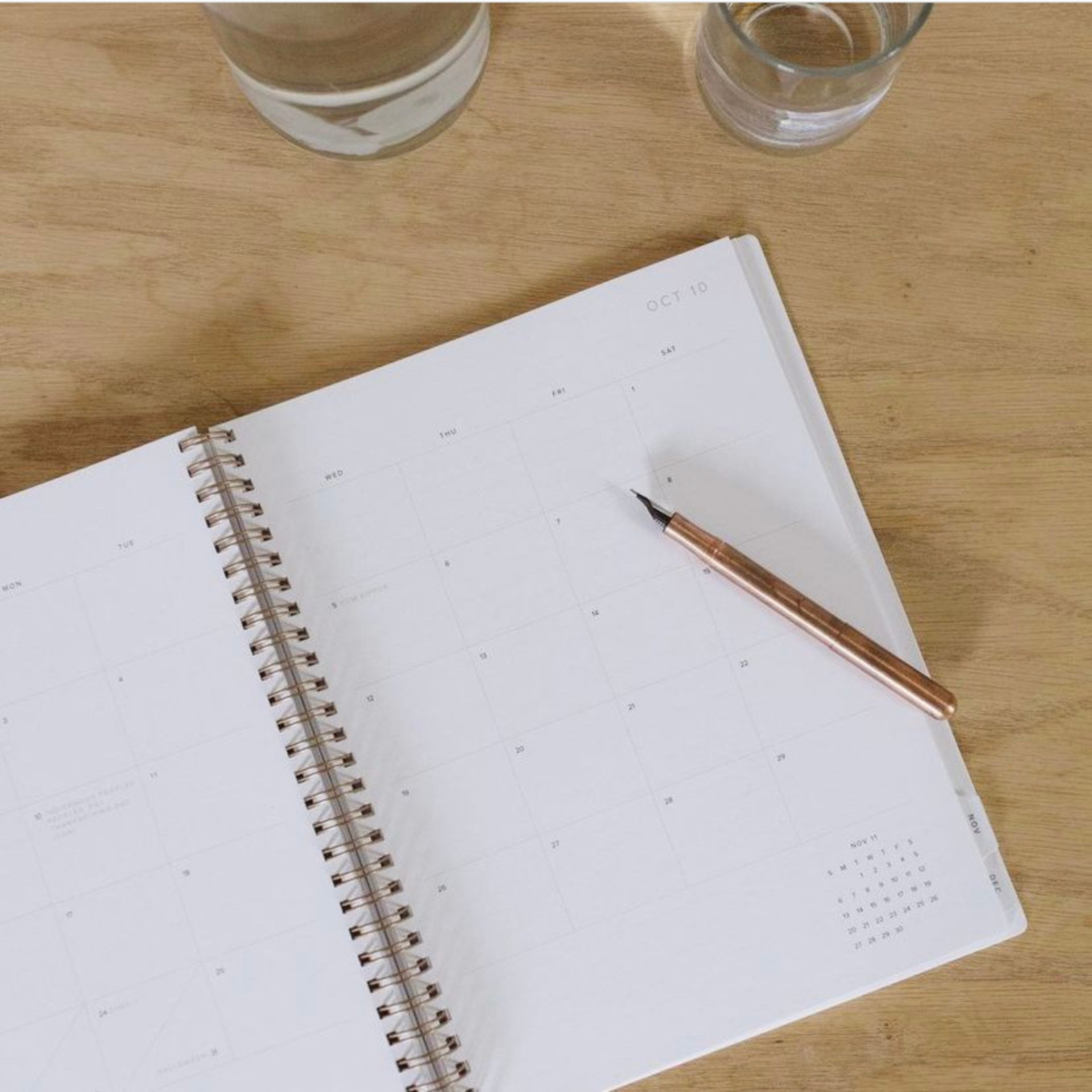
In a hyper-connected world, using a paper planner may seem counterintuitive. In reality, more and more people are choosing to return to paper precisely to think better, organize themselves more consciously, and reduce digital noise .
The key is not to choose between paper or digital , but to understand how to integrate them intelligently.
In this article, we'll explain how to best use a paper planner and how to combine it with digital tools to create a truly effective, flexible, and sustainable organizational system.
Why still use a paper diary:
Handwriting isn't just a matter of aesthetics. Several studies show that handwriting helps:
- clarify ideas
- improve memory
- make more informed decisions
The agenda becomes a space for active thinking , not just a list of appointments.
Your planner is where you choose what's important , not just where you record it.
What works best on paper (and what doesn't):
To truly leverage a planner, it helps to understand what role it should play in your organizational system.
Perfect to manage on paper diary
- Goals (monthly, quarterly, annual)
- Weekly planning
- Reasoned to-do list (not infinite)
- Notes, reflections, ideas
- Projects in development
Better to leave it to digital
- Automatic reminders
- Appointments to share with your work/family team
- Events shared with other people
- Deadlines requiring notifications
Paper and digital do not overlap , they complement each other.
In practice:
1. Use digital as an archive, paper as a compass
Tools like Google Calendar are perfect for:
- Shared appointments & events
The paper diary, on the other hand, is useful for reading the week as a whole and deciding how to tackle it.
2. Transcribe (don't copy)
Every beginning of the week:
- view the digital calendar
- rewrite in the diary only what really matters
This step isn't wasted time: it's the time you filter, prioritize, and make decisions .
3. One project = one page
If you work on projects:
- use the agenda for the big picture
- use digital tools like Notion or Trello for operational details
The agenda helps you not to lose direction, the digital one helps you not to lose the pieces.
How to Build a Routine That Works
The difference is not made by the instrument, but by consistency .
Recommended routine
- 5–10 minutes every morning to look at the day
- 15–20 minutes a week to plan
- 10 minutes at the end of the month to take stock
Common mistakes to avoid
- Using your agenda as an endless list
- Duplicate everything (same things everywhere)
- Never revise what you write
- Looking for the perfect system instead of a sustainable one
👉 A good system is the one you actually use .
What is the right agenda?
There's no universal answer. It depends on:
- how you work
- how much space do you need
- whether you prefer a weekly, daily or more free view
The important thing is that the agenda invites you to use it , not puts pressure on you.
In summary
Integrating paper diaries and digital tools means:
- using paper to think and choose
- using digital to remember and coordinate
- build a custom system, not a perfect one
The agenda is not used to do more.
It helps us do better .